When Jesus first called the disciples in Matthew 4:19 (ESV), He used an interesting phrase: ““Follow me, and I will make you fishers of men.”
Jesus knew His audience. He was speaking to career fishermen. Peter and Andrew, and then James and John, spent their days fishing out on the Sea of Galilee. Jesus entered into their lives and met them where they were, then offered them something more.
In this article, we will explore how Jesus used discipleship to achieve His promise. He made the disciples fishers of men through a life-on-life ministry that lasted three years. Through discipleship, He equipped the apostles to make disciples themselves and change the world.
Let’s dig into it.
The Importance of Learning from Others
One of our team members, Evan, used to live in New Zealand. He recently shared a story about his efforts to figure out fly fishing while living there.
I love fly fishing, but in the beginning, I was really bad. In fact, I spent about two years and walked dozens of miles with a fly rod in my hand before I actually caught something.
I grew up in Georgia, fishing mountain streams and catching smaller fish. I even learned how to cast my grandpa’s old fly rod and landed a small fish or two. When my wife and I moved to New Zealand in 2012, I was excited to go fly fishing in some of the best waters in the world. The fish are bigger, the water is clearer, and the scenery is unreal.
I learned the hard way, however, that fishing in New Zealand is not the same as in Georgia creeks. The fish are big, but they are smart. They spook easily, and you have to stalk up the rivers looking for them. If they see you first, they are gone.
I did not know any of this. I also had no clue what flies they ate. I did not know you had to cast to them from behind instead of alongside them (because if you got alongside them, they saw you and spooked). I kept at it, walking miles alongside beautiful rivers and spotting the fish I had spooked as they darted away.
I probably should have given up, but I just kept going. So what changed?
I started fishing in New Zealand at about the same time as my friend, James. We both spent a lot of time walking up and down streams without catching anything, but then James met an older angler who taught him some of the basics, identified the most popular flies, and corrected some rookie errors. James passed those lessons on to me.
I will never forget my first fish. I was on the Cam River (a small spring creek just outside of Christchurch), and James told me exactly which fly to use and where to cast it. I landed a dry fly on the water in the cool morning and saw the trout rise.
It was magical–years of frustration resolved in a few moments.
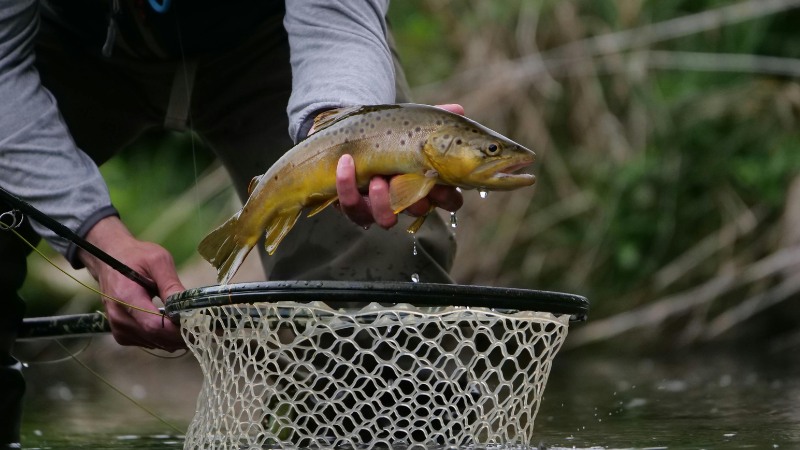
Over the next couple of years, I still had a lot to learn. I got better and better, catching fish in places I still dream about. It is a sport that can still humble me, but it is also the best.
Here are three things this experience taught me:
- Sometimes doing hard things means you will fail a few times before you succeed. That is part of the deal. If you keep at it and find success, it is even more rewarding because it was hard.
- The best way to achieve hard things is to do it with others. Who knows how much longer I would have hiked around with a fly rod before I caught something if James had not come alongside and helped me.
- And the one that haunts me – if I had actually paid for a fly fishing guide/coach in the beginning, I would have learned more in 8 hours from an expert than I learned in my first 2-3 years trying to figure things out on my own. If something is hard, then save yourself some trouble and learn from the people who are successful.
How Discipleship Makes Fishers of Men
There is a great line in the movie, A River Runs Through It. The narrator explains that his father was both a pastor and an avid fly fisherman. “He told us about Christ’s disciples being fishermen, and we were left to assume, as my brother and I did, that all first-class fishermen on the Sea of Galilee were fly fishermen and that John, the favorite, was a dry-fly fisherman.”
Unfortunately, the disciples were not actually fly fishermen, but like Evan, they had to learn from others. Working on a boat and casting nets in the Sea of Galilee, which was notorious for its violent windstorms, required extensive training.
Peter and Andrew were brothers, as were James and John. Odds are they learned how to fish at a young age from family members like their father or uncle. There were no YouTube videos, no fishing schools, and no training manuals. They simply went out and fished, watching the experts who slowly gave them more autonomy as their skills improved.
Jesus did the same thing when He discipled the apostles. He did not offer a formal training course or hand them a manual to read. Instead, He invited them to walk alongside Him, to live in a life-on-life relationship so they could watch Him work. He equipped the disciples, gradually giving them greater autonomy to become fishers of men themselves.
By the time He gave them the Great Commission and ascended into Heaven, His disciples were ready to be fishers of men. They had learned from Jesus, the ultimate disciple-maker, and could now pass what they learned on to others.
The Importance of Learning from Others
Trying to teach yourself anything is hard work. It is much more effective to learn from others who have gone before you.
Evan learned that the hard way while trying to figure out fly fishing in New Zealand. The disciples experienced it for themselves in learning from Jesus. And since then, millions have discovered the value of spiritual growth and transformation that comes through life-on-life missional discipleship.

Today, when we make and train disciples, we are doing the same thing Jesus did with the disciples. We invite people into a life-on-life relationship and share what we have learned. They can see our approach, they can learn from our methods. We can help them study the Bible, share the gospel, and go out on mission.
As you invest in others, they begin to grow until, eventually, they are able to start discipling others themselves. People who learn from others love to pass that knowledge on to the next generation, so discipleship can have a multiplication effect.
Consider if You Need a Guide or Coach
If you want to learn to become an effective disciple maker, then you should learn from someone who is already making disciples.
If there is someone in your life, you can approach them and ask about joining their group or being mentored by them. If you do not know anyone in your life like this, then consider hiring a coach or trainer.
If Evan had hired a guide in the beginning he would have saved himself a couple years of frustrating trial and error. The same can be true about discipleship.
Here at Life on Life, we have spent years working with other churches and leaders who want to launch a discipleship movement in their church. We offer a discipleship training cohort where we come alongside leaders to show them how to make disciples and build a discipleship ministry wherever they live, work, and play.
It is not a training manual or series of YouTube videos, but rather we equip disciple-makers and fishers of men through the same method Jesus used: discipleship.
You can learn more about our discipleship training approach by reading our article 7 Reasons to Join our Next Discipleship Training Cohort or join one of our upcoming discipleship training cohorts that happen all over the world.