Leading a discipleship group is one of the most meaningful investments you can make in the lives of others, but it is not without its challenges. The gap between a group that thrives and one that quietly fizzles is not usually a matter of passion or good intentions, but a matter of recognizing and overcoming the obstacles that get in the way.
At Life on Life, we have worked with hundreds of churches around the world to build discipleship movements that last. In that process, we have seen the same challenges in churches of all sizes, in different cultures, and at different stages of their discipleship journey. The good news is that these obstacles are not unique to you, and they are not insurmountable. In fact, identifying them is the first and most important step toward leading a group that produces real, lasting spiritual transformation.
In this article, we are going to walk through the most common obstacles to effective discipleship groups and give you practical guidance for overcoming each one. Whether you are just getting started or have been leading a group for years, our hope is that this resource helps you lead with greater clarity, consistency, and confidence.
Lack of Preparation
Effective discipleship meetings do not happen by accident. When a leader shows up without having reviewed the material, thought through discussion questions, or considered where each member of the group is spiritually, it shows. Conversations stall, discussions lose depth, and the time together starts to feel more like a casual hangout than an intentional investment in one another’s spiritual growth.

Over time, a lack of preparation quietly communicates to group members that the meeting is not worth taking seriously.
Preparation is an act of leadership and an act of love. It signals to your group that you value their time and that you are genuinely invested in their growth. This does not mean you need to over-engineer every meeting or arrive with a rigid agenda. It means you have spent time in the material, you have prayed over your group members, and you have thought about how to create space for honest, meaningful conversation.
For a deeper look at how to approach your preparation, check out our guide on How to Plan Your Next Discipleship Meeting.
Group Size is Too Large
It might seem like a good problem to have: your discipleship group is growing, new people want in, and the energy is high. But in the context of life-on-life missional discipleship, a group that grows too large can quickly lose the very thing that makes it effective. Intimacy, vulnerability, and personal investment are the lifeblood of a discipleship group, and those things are incredibly difficult to sustain when the group swells beyond its intended size.
This is one of the most important structural differences between a small group and a discipleship group. Small groups are designed to accommodate anywhere from 8 to 25 people, while discipleship groups are intentionally kept to 4 to 6 members. That is not an arbitrary number. It reflects the reality that genuine life-on-life discipleship, the kind where people truly know one another, speak honestly into each other’s lives, and grow toward spiritual maturity together, requires a level of closeness that simply cannot exist in a larger group setting.
When a group starts to feel too large, the answer is not to simply keep adding chairs. The answer is multiplication. Rather than viewing a group that is ready to multiply as one that is breaking apart, reframe it as one that is succeeding.
The goal of a discipleship group should never be to stay together indefinitely, but to produce mature, equipped followers of Christ who are ready to go and invest in others. When a group multiplies, that is the movement working exactly as it should. Leaders who cast this vision early help their group members embrace multiplication as the natural and exciting next step, rather than something to resist.
Inconsistent Attendance and Lack of Commitment
Discipleship groups are built on relationships, and relationships require consistency. This is even more important when you are working in a group of four to six people.
When group members show up sporadically, missing one week, arriving late the next, dropping off entirely for a month, it can do more damage than most leaders realize. Trust erodes and vulnerability dries up. The group loses its rhythm, and the members who do show up faithfully begin to feel like their commitment is not shared. Over time, inconsistent attendance can quietly unravel even the most promising group.
This is one of the key distinctions between a discipleship group and a typical small group. Small groups are generally designed with a low-commitment, open-door structure. That can serve an important purpose in the spiritual formation pathway, but discipleship groups operate differently. They are high-commitment by design, because the kind of life-on-life transformation they are meant to produce simply cannot happen without consistency.
The best time to address attendance and commitment is before the group ever begins. Cast a clear vision for what the group is and what it requires. Have an honest conversation about expectations, not to be rigid or legalistic, but to help prospective members count the cost and make a genuine decision to invest. Mid-week communication also plays an important role here. A simple text or check-in during the week reinforces that the group is more than a meeting, but a relationship worth showing up for.
Learn more about the importance of consistency with your group in the article, 11 Habits of Effective Discipleship Leaders.
Letting Curriculum Lead Instead of People
There is a subtle but significant trap that many discipleship group leaders fall into: becoming so focused on getting through the material that they miss what is actually happening in the room. When a leader feels pressure to answer every discussion question and cover every section of the curriculum, the group can start to feel more like a college class than a discipleship relationship. The curriculum becomes the driver, and the people become secondary.
Effective discipleship is life-on-life, not curriculum-on-life. Curriculum is a valuable tool, but it is meant to serve the people in the room, not the other way around. The best discipleship curriculum creates structure and provides a foundation of truth, but it also leaves room for real life issues to surface. If someone in your group is walking through a difficult season, a good leader knows when to set the questions aside and simply be present with that person. As we explore in our article, Why the Journey Curriculum Works, the most effective curriculum is designed to facilitate transformation, not just information transfer.
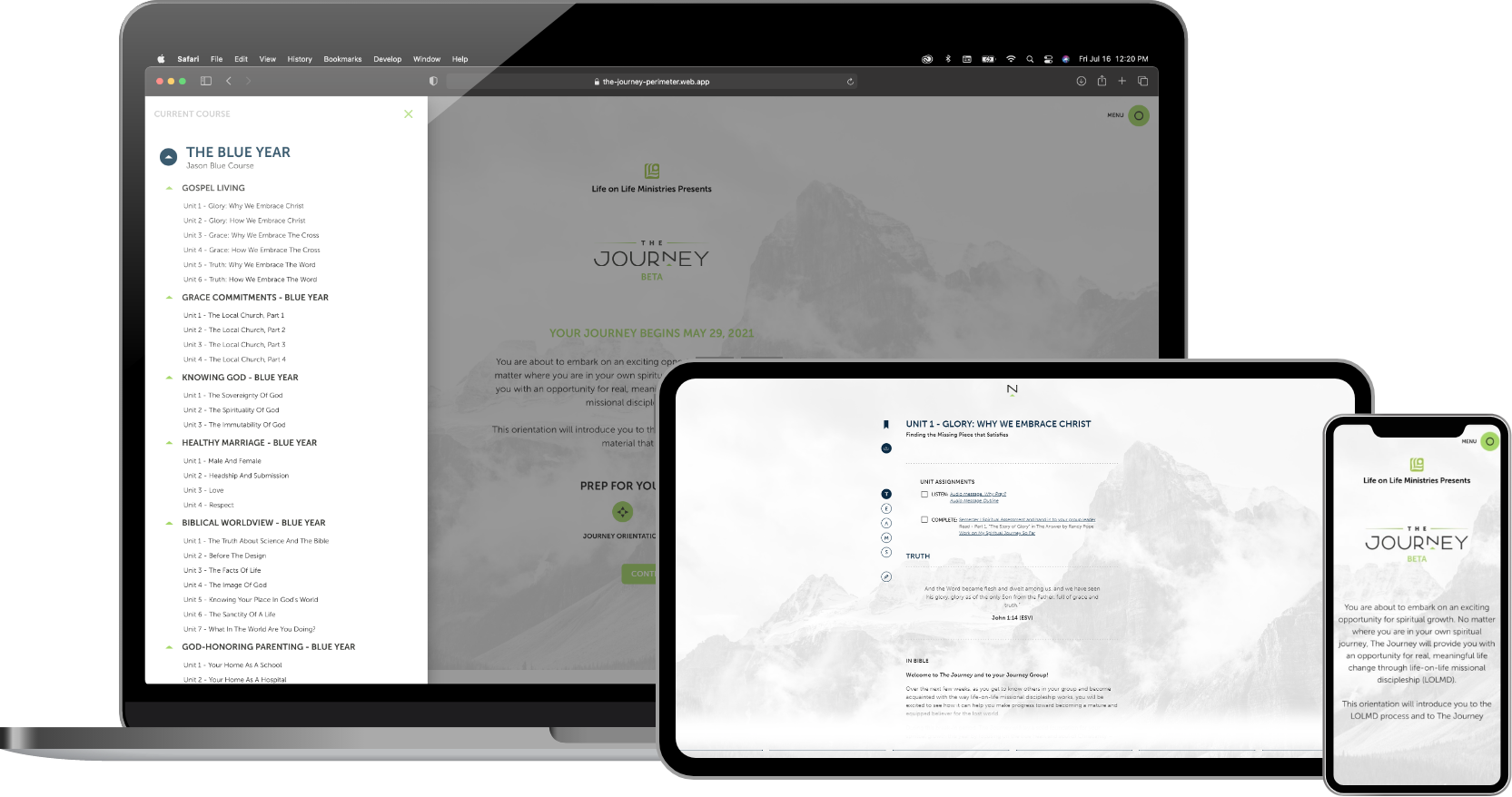
This is also where the T.E.A.M.S.™ framework becomes so important. Truth, Equipping, Accountability, Mission, and Supplication are not five boxes to check before the meeting ends. They are five dimensions of a spiritually healthy group that should breathe naturally throughout your time together. When a group is operating within T.E.A.M.S.™, the curriculum becomes a launching pad for genuine life conversation rather than a script to be performed. Stay anchored to the people in front of you, and let the curriculum serve that purpose faithfully.
Avoiding Real Accountability
Accountability is one of the most powerful elements of a discipleship group, but also one of the most commonly avoided. It is uncomfortable to ask hard questions, and it is even more uncomfortable to answer them honestly. As a result, many groups develop an unspoken culture of keeping things surface-level. Everyone shares enough to feel connected, but not enough to feel truly known. And without genuine accountability, the group loses one of its most transformative gifts.
The tendency to avoid deep accountability is understandable. Vulnerability requires trust, and trust takes time to build. But leaders can accelerate that process by modeling it themselves. When you, as the leader, share your own struggles openly and invite others to speak into your life, you give your group permission to do the same.
Accountability is not about policing behavior; it is about caring enough about someone’s spiritual growth to ask the questions that matter.
It is also worth noting that accountability works best when it is consistent. Following up and remembering what was shared communicates to your group members that they are in a place where people are truly seen. For more practical guidance on building a healthy culture of accountability in your group, check out the article, Adjusting Accountability in Discipleship.
Limiting Discipleship to the Weekly Meeting
A common misconception about discipleship is that the weekly meeting is the primary place where discipleship happens. In reality, the meeting is just one touchpoint in what should be an ongoing, life-sharing relationship. When discipleship gets confined to a single hour each week, it loses the depth and continuity that make it truly transformative.

Life-on-life discipleship, by definition, means sharing life together—not just a curriculum. It means texting someone on a Tuesday when you know they have a hard conversation ahead of them. It means grabbing coffee one-on-one to go deeper than the group setting allows. It means inviting a group member along on an ordinary errand and letting faith come up naturally in the conversation.
The weekly meetings matter, but they should be the rhythm that holds everything else together, not the ceiling of what discipleship looks like. Encourage your group members to connect outside of the scheduled meeting time, and model it yourself. For ideas on how to build connection outside of your group time, check out 11 Opportunities for Life-on-Life Discipleship Outside of Group.
Ready to Take Your Discipleship Group to the Next Level?
Recognizing these obstacles is an important step in launching a successful discipleship movement, but you do not have to navigate them alone.
At Life on Life, we have spent decades walking alongside church leaders and discipleship group leaders to help them build movements that produce real, lasting transformation. Whether you are just getting started or looking to strengthen an existing group, we have the training, resources, and coaching to help you move forward with confidence.
Explore our free guides on Making Disciples and Training Disciples, or you can join an upcoming information call to learn more about our discipleship training process.